For generations, Indian families have treated gold jewellery as savings you can wear. A bangle bought at Diwali, a chain given at a child’s birth, a heavy set given at a wedding: each adds to a family store of value that can be passed down or, in hard times, sold. Indian households are thought to hold one of the largest private stocks of gold in the world. In 2019 the World Gold Council estimated it at up to 25,000 tonnes.
But not all gold is equally good as an investment. This guide explains the tradition, then compares jewellery, coins and bars on what you actually get back.
- Gold is traditionally bought on auspicious days such as Dhanteras and Akshaya Tritiya.
- Investment jewellery is plain, heavy 22ct gold with few or no stones.
- Making charges and stones add to the purchase price but not to resale value.
- Coins and bars carry the lowest premium over the gold price, so more of your money stays in the gold.
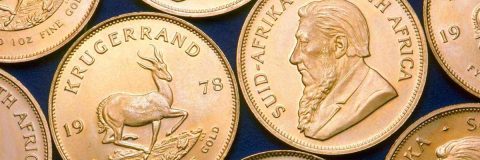
- In South Africa, Krugerrands are the most widely traded gold coin.
Why Indian families buy gold
- Security. Gold holds value across generations and is easy to sell anywhere in the world.
- A woman’s own wealth. In Hindu tradition, gold given to a woman is her property (stridhan), which has historically given women financial independence.
- Blessing and prosperity. Gold is associated with Lakshmi, the goddess of wealth, so buying it on auspicious days is seen as inviting prosperity.
- Something you can use. Unlike money in the bank, jewellery is worn and enjoyed at weddings and festivals.
Auspicious days for buying gold
The two biggest gold-buying days are:
- Dhanteras, the first day of Diwali celebrations. Buying gold or metal on this day is believed to welcome Lakshmi into the home. In 2027, Dhanteras falls on Wednesday 27 October.
- Akshaya Tritiya, in spring. “Akshaya” means never diminishing, and gold bought on this day is believed to keep growing in value. In 2027, Akshaya Tritiya falls on Sunday 9 May.
Dates follow the Hindu lunar calendar, so they change every year, and exact timings differ by city. Check with your temple or a panchang for your area.
What makes jewellery “investment” jewellery
If the main aim is to store value, the best jewellery is the simplest:
- High purity: 22ct (916). More gold per gram than 18ct or 9ct.
- Heavy and plain: solid bangles, kada, chains and coin necklaces.
- Few or no stones: stones, glass and enamel are paid for at purchase but do not add gold value.
- Hallmarked: a BIS hallmark with a 22K916 mark and a HUID code makes the purity easier to prove later.
- Low making charges: machine-made plain designs carry lower labour costs than intricate handwork.
Jewellery vs coins vs bars
| Plain 22ct jewellery | Gold coins (e.g. Krugerrands) | Gold bars | |
|---|---|---|---|
| Premium over gold price when buying | Highest (making charges) | Low to moderate | Lowest |
| Can you wear it? | Yes | No (unless mounted) | No |
| Purity | 91.6%, needs testing when sold unless hallmarked | Known and guaranteed by the mint | Known, stamped by the refiner |
| Resale | Valued on gold weight; making charges lost | Easy to sell; recognised everywhere | Easy to sell; larger bars may need assay |
| Cultural and family value | High | Moderate (coins are popular gifts) | Low |
A Krugerrand contains exactly one troy ounce (31.1 g) of fine gold, in a 22ct coin, so it fits naturally with the 22ct tradition. It is South Africa’s best-known gold coin and is easy to sell. Older families may also hold British gold sovereigns, the coin that gave the South Indian “pavan” its name. See Krugerrand prices or our guide to gold sovereigns.
Many families choose a mix: jewellery for weddings and wearing, coins for savings.
Tips if you are buying gold as savings
- Separate the gold price from the rest. Ask for the gold weight, purity, gold rate and making charges to be listed separately on the receipt.
- Keep your receipts and hallmark details. They make insurance, inheritance and resale far simpler.
- Weigh up stones carefully. A set with glass kundan stones may cost a lot more than its gold content.
- Insure it. Household insurance often limits jewellery cover unless items are specified with a valuation. We can provide written valuations.
- Think long term. The gold price rises and falls. Gold has historically been a store of value over long periods, but it can fall in the short term. This is general information, not financial advice.
Know what your family gold is worth today
Use our gold value calculator, or visit a branch for a free XRF test and written valuation.
Contact usFrequently asked questions
Is gold jewellery a good investment?
Plain, high-purity jewellery keeps its gold value, but you lose the making charges and anything paid for stones when you sell. For pure investment, coins and bars usually return more of what you paid. Jewellery has the added benefit of being worn and passed down.
Why do Indians buy gold on Dhanteras?
Dhanteras is the first day of Diwali. Buying gold or metal on this day is believed to bring prosperity and welcome the goddess Lakshmi into the home.
When is Akshaya Tritiya in 2027?
Akshaya Tritiya falls on Sunday 9 May 2027. Timings vary by location, so check a local panchang.
Are Krugerrands 22 carat?
Yes. A Krugerrand is 22 carat gold and contains one troy ounce of fine gold. The rest is copper, which makes it harder wearing.